What Is Aerial Stock Footage? A Complete Guide for Global Creators
Watch any travel film, car ad or property video and you'll notice a pattern. The shot that makes you sit up is usually the one taken from above. A mountain range from a thousand feet. A coastline curving away into haze. A city that suddenly looks like a map.
That is aerial footage, and you don't always need a drone, a pilot and a stack of permits to get it. Aerial stock footage lets you license clips that someone has already shot, then use them in your own project.
This guide explains what aerial stock footage is, how it is made, where it fits, and how to choose the right clips. If you are sourcing footage of India from another country, there are a few extra things worth knowing, and we cover those too.
What is aerial stock footage?
Aerial stock footage is ready-made video shot from above, usually by drone, helicopter or small plane, and offered for licensing. You browse a library, pick a clip, take the right license, and edit it into your own video.
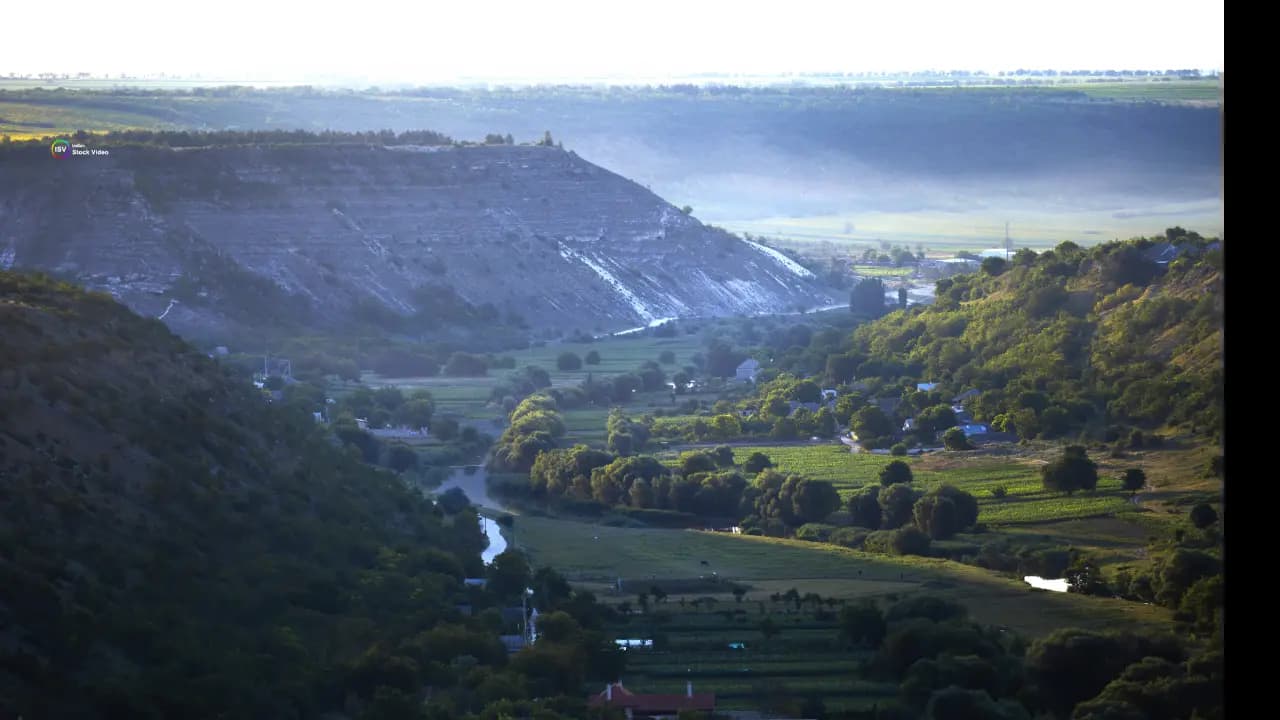
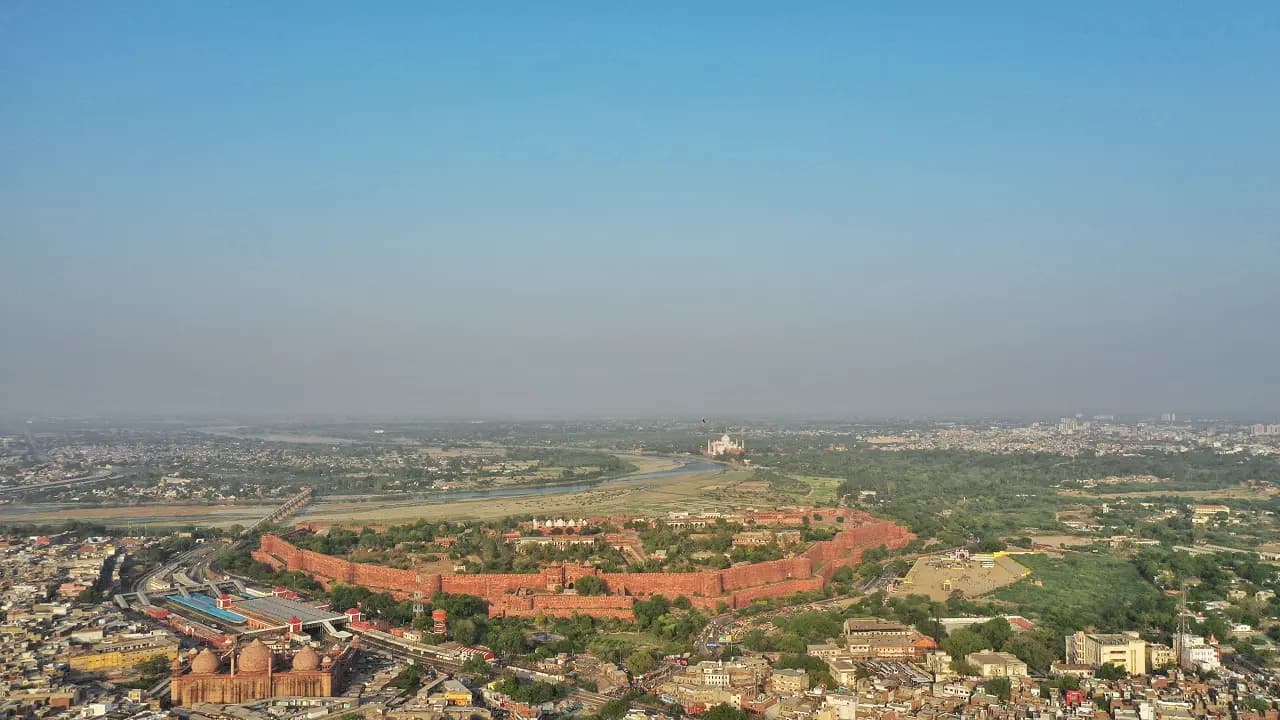
The big difference from ground-level footage is scale. Aerial shots show layout and distance. They show how a fort sits on a hill, how a river cuts through farmland, or how a city spreads along the sea. A camera on the ground simply can't give you that.
How aerial footage is shot
Most clips today come from drones carrying a camera on a gimbal. The gimbal keeps the camera steady while the drone moves, which is why good footage glides instead of shaking. Helicopters and planes are still used for very high or very long shots, but they cost a lot more.
Behind every clean clip there is usually a trained pilot, a planned flight path and patient timing. Early morning and late afternoon give soft, warm light. Harsh midday sun tends to flatten everything.
Common types of aerial shots
You will see the same handful of shot types again and again. Knowing them makes searching and editing easier.
• Establishing shot: a wide view that tells the viewer where they are before the scene begins.
• Top-down shot: the camera looks straight down. It works well for fields, roads, rivers and crowds.
• Orbit: the drone circles a subject such as a temple, a fort or a bridge.
• Forward fly-through: the camera moves ahead over land, water or a city.
• Reveal: the shot starts behind a cliff or a building, then rises to uncover the view.
• Hyperlapse: a moving time-lapse that compresses hours into seconds.
Where creators use aerial stock footage
Ad agencies use it to open brand films and set a sense of place. Documentary teams use it to give a story context. Travel and tourism brands rely on it because nothing sells a destination like a view from above.
Real estate companies show the surroundings of a project. Corporate teams add it to company films and investor decks. Social media editors drop short clips into Reels, Shorts and Stories to lift a plain edit. News and editorial teams use it when they can't send a crew.
Stock footage vs your own drone shoot
Shooting your own footage gives you full control over the angle and timing. It also means paying for a crew, equipment, travel and insurance, then waiting for good weather. In India, drone flying comes with its own rules, including permissions and no-fly zones near airports, borders and some sensitive sites. For an overseas team, that is a lot of paperwork before a single frame is shot.
Stock footage is available today, costs a fixed amount and carries no weather risk. The trade-off is that the clip was not made for your script, so you can't ask for a specific angle.
Many teams use both. They license stock for wide, scenic and establishing shots, and shoot custom footage only for moments that must be unique. If you need something specific, you can also ask the platform to source it through a request.
Resolution and format: what to pick
4K gives you room to crop, reframe and stabilise without losing sharpness, and it holds up on large screens. Full HD is fine for most websites and social platforms. A good rule is to choose a resolution higher than your final delivery size if you plan to edit the frame.
Orientation matters too. Landscape suits YouTube, TV and websites. Portrait suits Reels, Shorts and Stories. Check that the library you pick offers both.
Understanding licenses
Licensing is where buyers slip up most often, so it is worth a few minutes.
• Royalty-free: you license the clip once and don't pay again each time it is viewed. It does not mean the clip is free or rule-free.
• Commercial: cleared for promotional use such as ads, brand films and marketing content.
• Editorial: meant for news, documentaries and educational use, usually not for advertising.
• Free: available at no cost, often with usage conditions you should read.
Always read the license agreement before you download. Check where the clip can be used, for how long, and on which media.
How to judge good aerial footage
• Stability: movement should be smooth, with no jitter or sudden jerks.
• Sharpness: play the preview in full screen and look at the edges of the frame.
• Light: soft, directional light almost always looks better than flat midday sun.
• Clean frames: watch for propellers, the drone shadow, visible logos and recognizable people. These can limit commercial use.
• Length: pick clips with a few spare seconds at the start and end so you can trim and add transitions.
• Metadata: clear titles, locations and tags save you time when you search again later.
Mistakes buyers make
• Choosing by thumbnail alone. Always watch the full preview.
• Buying low resolution, then cropping hard. The footage turns soft.
• Skipping the license type. A clip that is fine for a documentary may not be fine for an ad.
• Mixing too many looks. Clips shot at different times of day or with different color tones can clash in one edit.
• Picking the obvious clip. If every competitor uses the same famous skyline, your video blends in.
Why aerial footage of India stands out
Few countries pack so much variety into one set of maps. India gives you snow-covered Himalayan peaks, the dry valleys of Ladakh, the coast of Goa, the backwaters of Kerala, fast-growing metros, old forts, temples and wide stretches of farmland.
Global stock libraries lean on the same few locations. Fresh, authentic aerial clips from India help your work look different, and they are shot by people who know the places.
Indian Stock Video has a library of more than 10,000 clips shot in India, including a dedicated aerial collection in 4K and HD. You can browse it on the aerial stock footage page, or start with the free videos if you want to test quality first.
Also Explore: Looking for Specific Video?
Frequently asked questions
Is aerial stock footage the same as drone footage?
Mostly, yes. Most aerial stock today is shot by drone, but some clips come from helicopters or planes. Both are licensed in the same way.
Can I use aerial stock footage in commercial projects?
Yes, if the clip carries a commercial license. Editorial and free clips may have limits, so read the license agreement before downloading.
Which resolution should I choose?
Choose 4K if you plan to crop or deliver on large screens. Full HD works well for most websites and social videos.
Is stock footage cheaper than a custom drone shoot?
Usually, for wide scenic shots. You skip crew, travel, permits and weather delays. Custom shoots still suit scripted, one-of-a-kind shots.
Can I get portrait clips for Reels and Shorts?
Yes. Indian Stock Video offers both landscape and portrait clips, so you can match the format to the platform.
Is royalty-free the same as free?
No. Royalty-free means no extra fee per use after you license the clip. Most clips are paid, though some free clips exist.
🎉 Get 50% Off Your First Indian Stock Video!
Use code ISV50 at checkout and save 50% on your first purchase.
Final thoughts
Aerial footage adds scale, mood and context that no other shot can. Knowing the shot types, resolutions and license rules helps you buy with confidence and edit faster. When you are ready, browse the aerial collection and find the view your story needs.
About the author
Gaurav Raj is the founder of Indian Stock Video, a royalty-free stock footage platform based in Noida, built around authentic videos shot across India. Working across technology and creative production, Gaurav Ra writes about how agencies, brands and filmmakers can find better footage and license it with confidence.